

Building a Learning Network
When I joined PatientsLikeMe, we had over a decade’s worth of experience building patient communities. Our site and apps held a treasure trove of data and patient stories regarding health issues and related lifestyle challenges. Our internal metrics however were showing declining engagement and organic sign-ups. We realized that people were having a hard time finding good content amidst the breadth of posts generated in our newsfeed and forums.
I was given a team and a charter to reconsider our content architecture and the ways in which we facilitated the creation and consumption of information. We also had to develop a solution that could work for desktop, mobile web, and our native apps.
Our Goal:
Help users feel less alone & learn from each other so they’ll want to return regularly to engage with their community on PatientsLikeMe.
Key Design Challenges:
How do we help users find, build, and connect to the “right” community?
How do we match users to content that is relevant, valid, and trustworthy?
How do we build users into valuable contributors + keep them engaged in driving interactions across their community?
Design Sprint
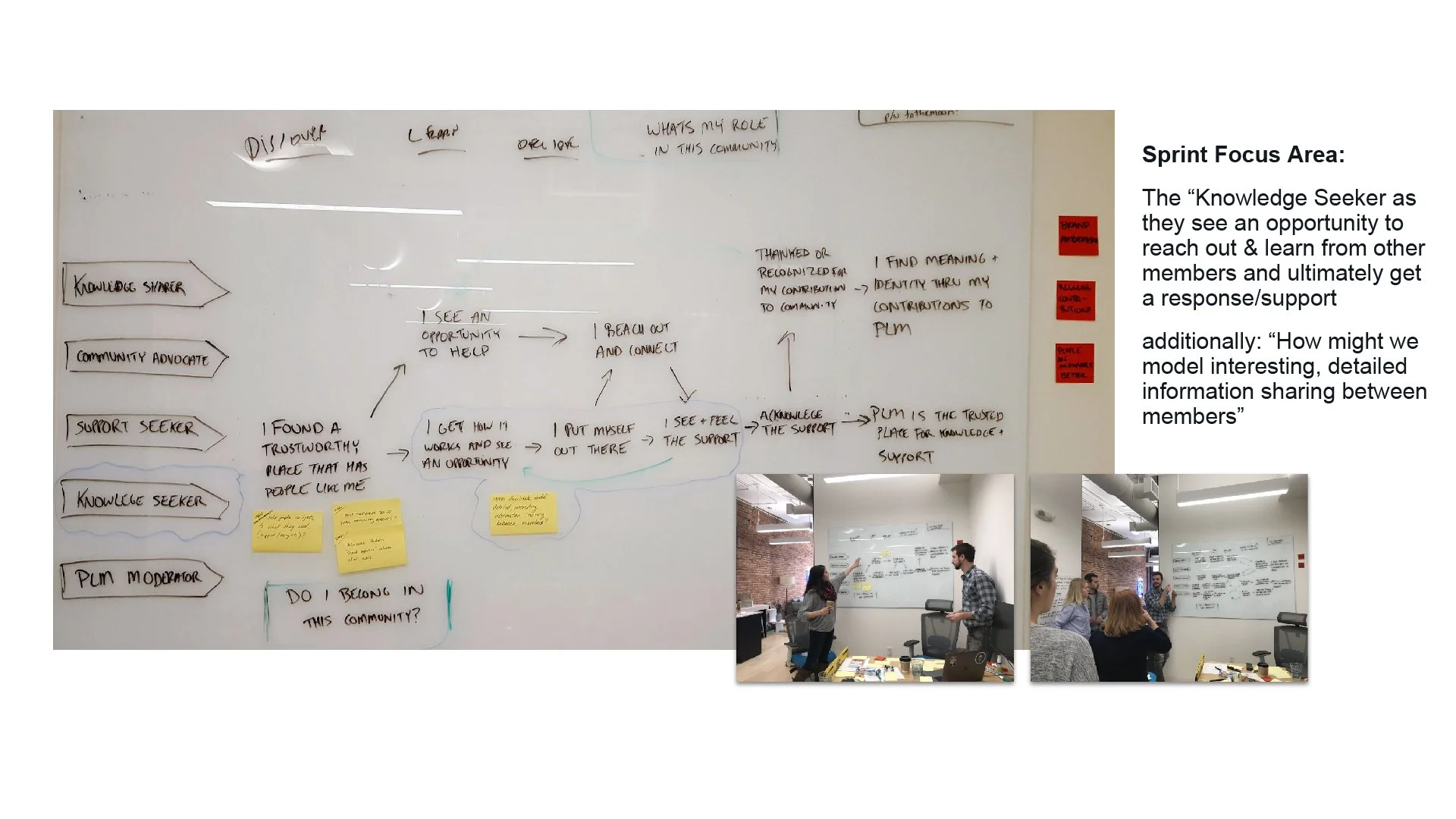
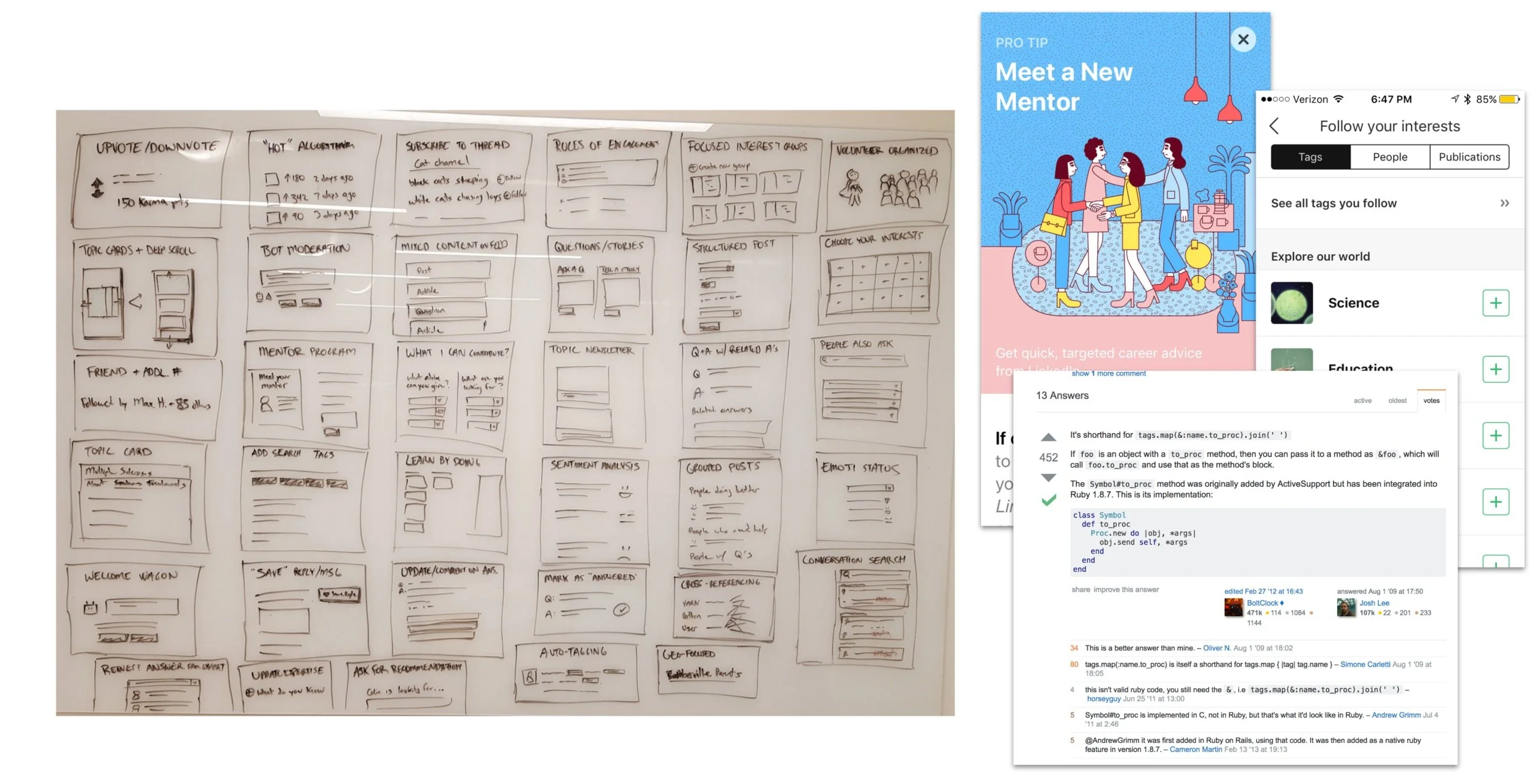
To kick off with the new team and get rapid feedback on some initial concepts, we ran a 5-day design sprint.
The Assumptions We Tested:
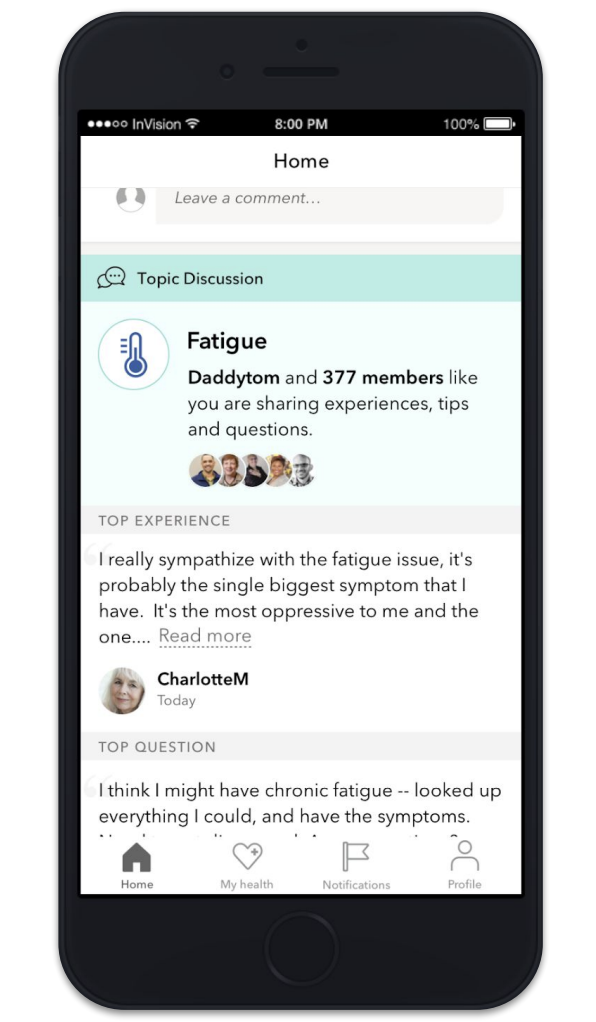
Organizing information around topics and discussions will be more valuable than the current newsfeed
More proactive calls to action will encourage members to participate in discussions
Restructuring the content as “Stories”, “Questions”, and “Tips” will be meaningful and useful for our members.
This approach will make it easier for members to find others with shared experiences
We can use “upvoting” to help surface most valuable content
Concept Development
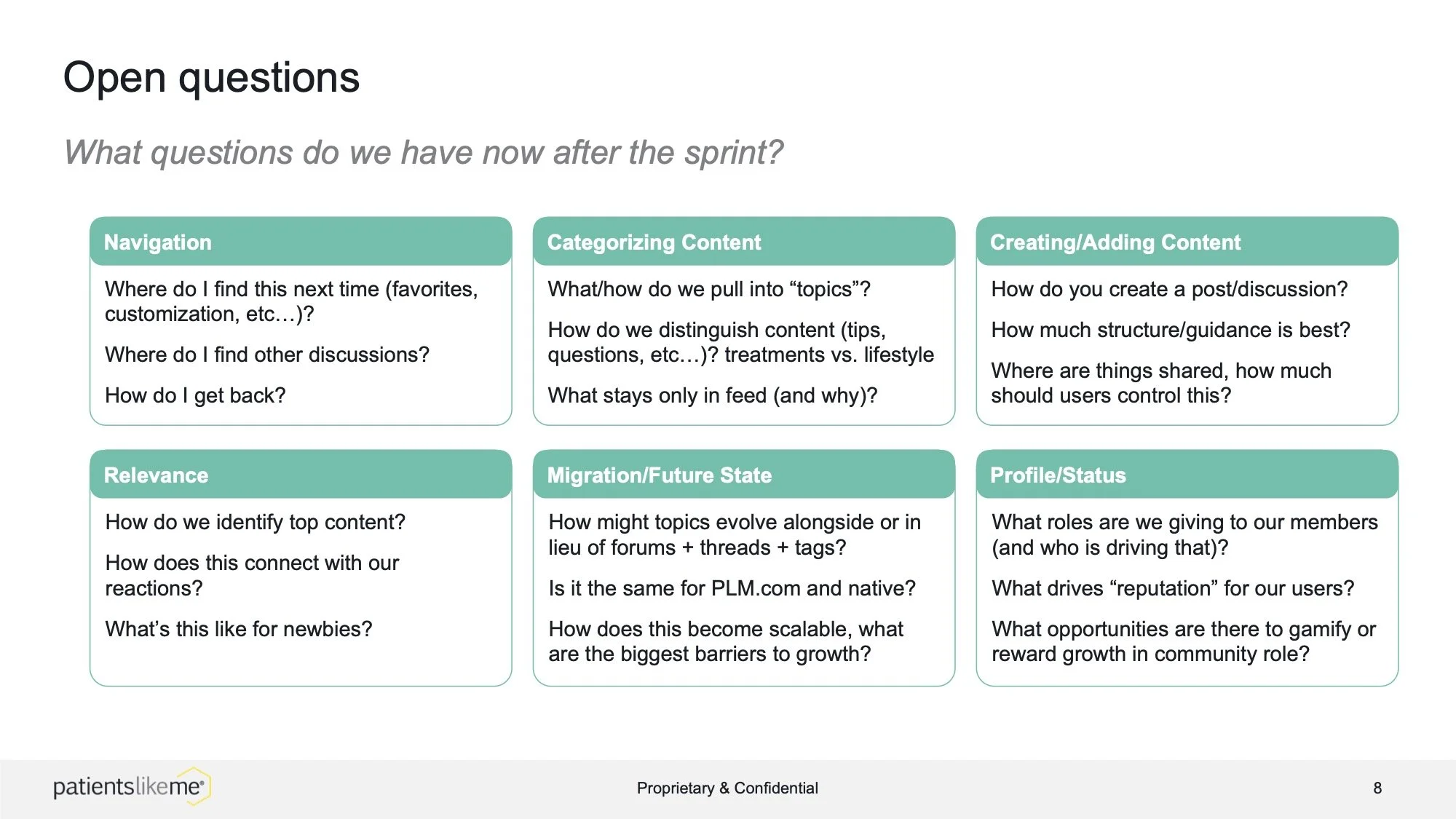
With some strong initial concept validation under our belt, I worked to frame up our opportunities and key hypotheses. I led us through a more robust second design iteration and follow-up round of user testing which confirmed many of our initial findings.
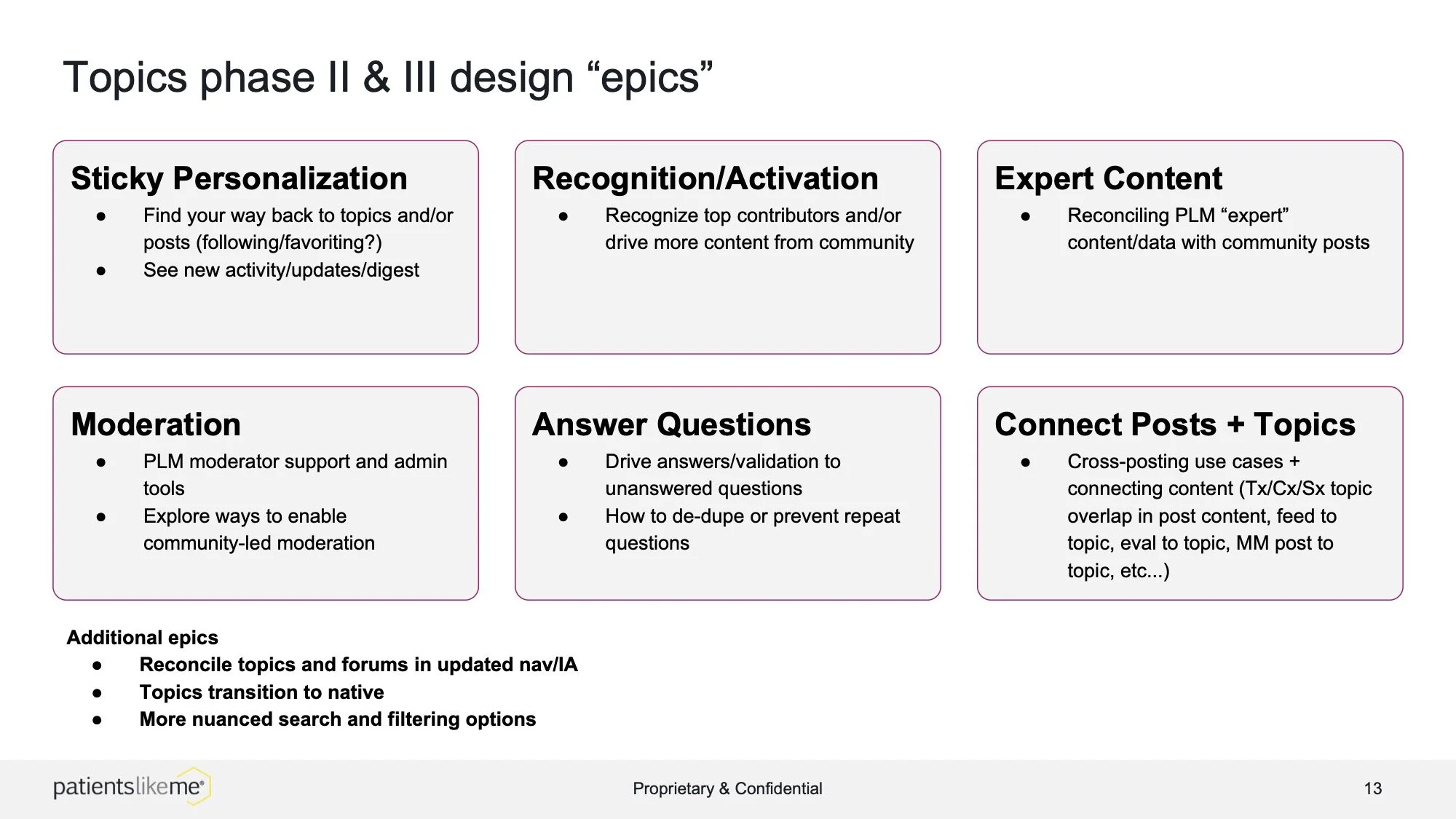
From these explorations we were able to define our pilot solution and focused it around a LEAN framework that helped us prioritize what we built first and the key measures (qualitative and quantitative) by which we measured our success. I also helped the team prioritize the upcoming epics and sprint goals (I stepped in for a departing PM during much of this project).
PROJECT CHARTER
More than just stories - we’re building a database of the lived experience with serious diseases.
PLM guides members to the best insights
from patients within the right context
so members can thrive in the real world
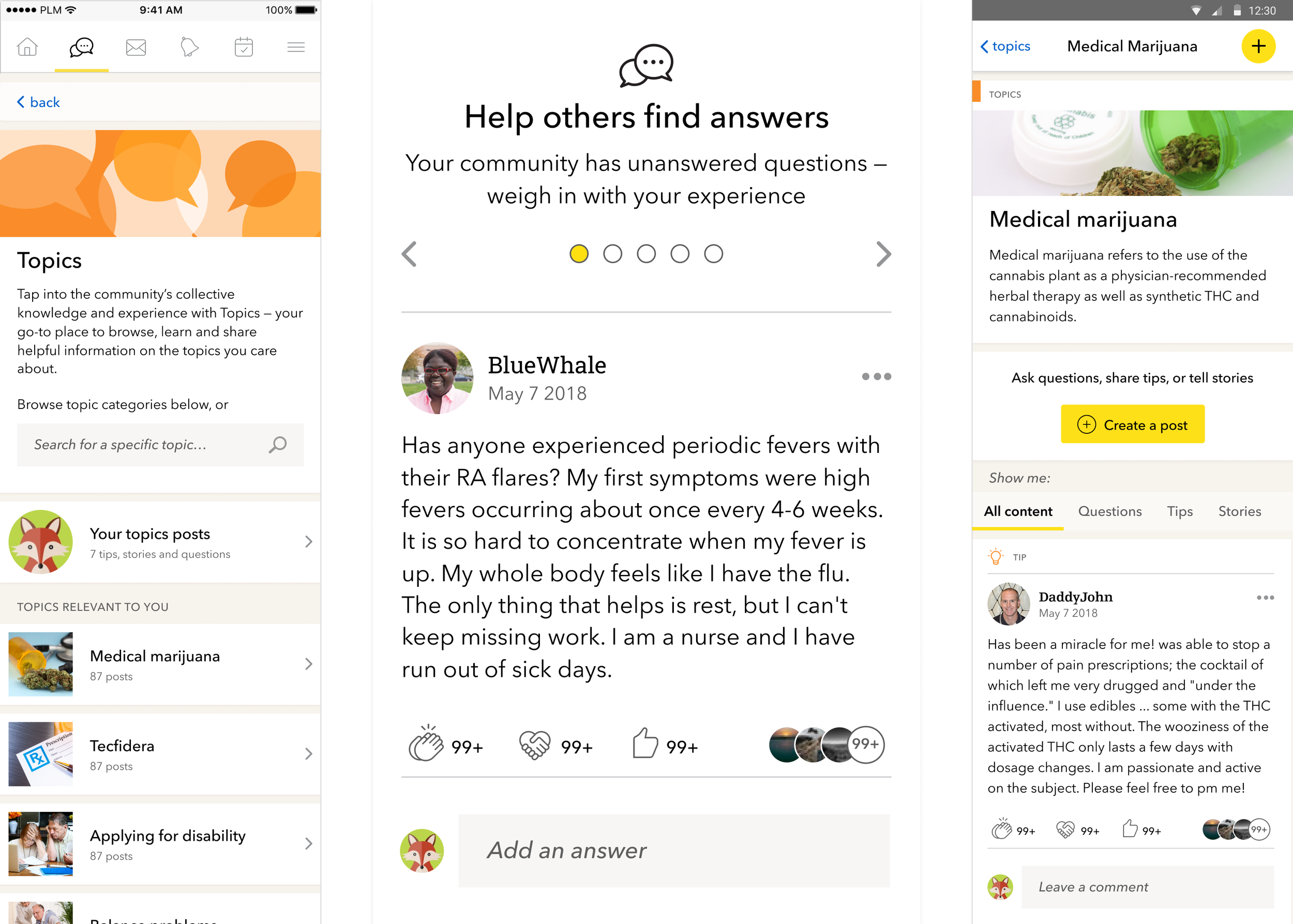
Demo of the live “Topics” site during the beta launch.
We’re seeing the behavior we hoped for - which is people asking and answering questions, supporting one another, and sharing valuable stories and tips.
V2 - Show Me the Good Stuff!
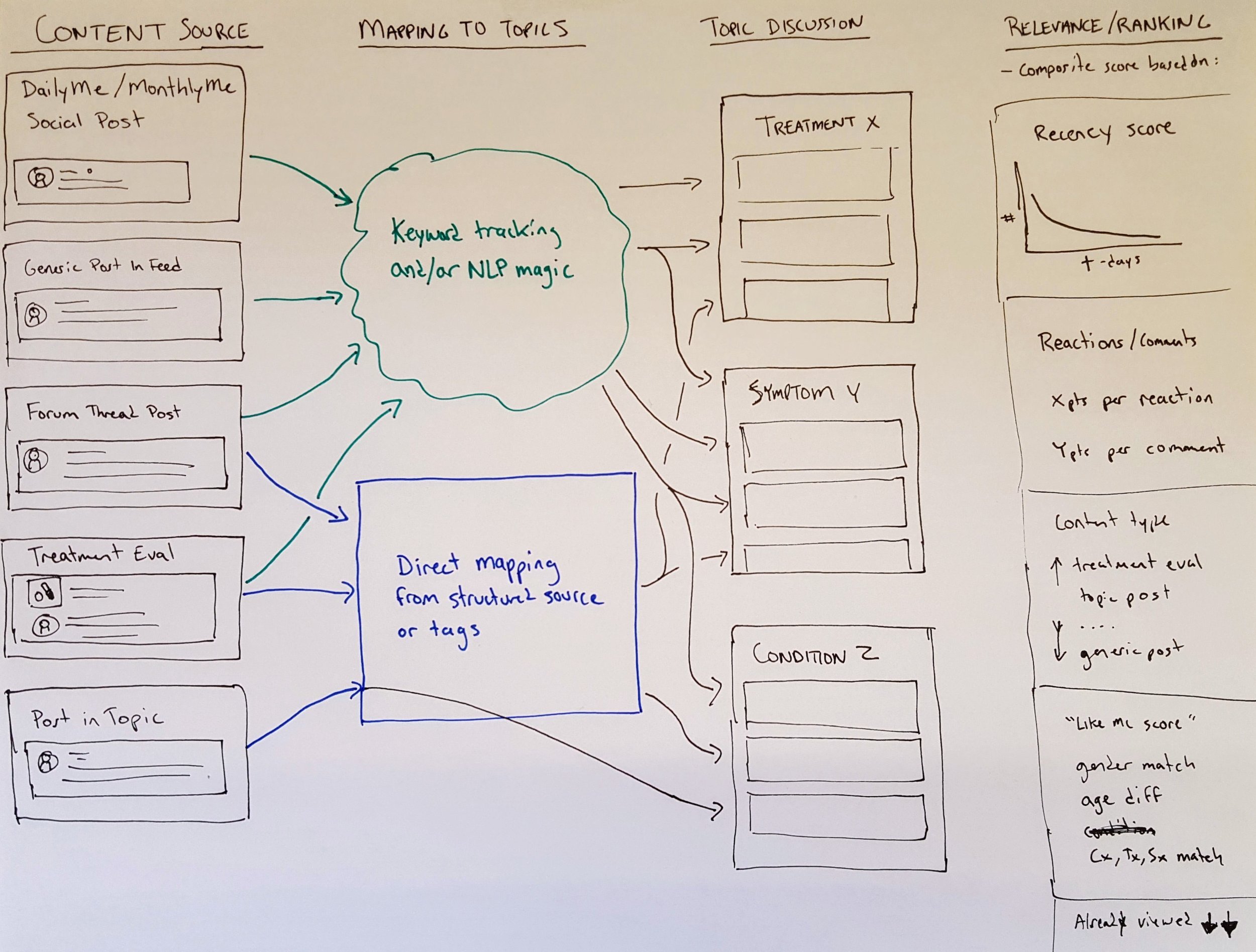
We knew one of the major challenges of this project would be our ability to surface the right content to the right people to help them get answers to the questions they care about. In parallel to refining the front-end experience, I paired with two of our developers to iterate on a relevance engine that would push up higher quality content in the topics feed based on what we knew about the posts and the reader.
We spent several sprints optimizing the algorithms until we felt that we had a feed which represented a significant improvement over a chronological view. We then launched the engine with embedded behavioral analytics to measure whether users found relevant content faster and were more likely to return to the site as a result.
V3 - Learn from the Experts?
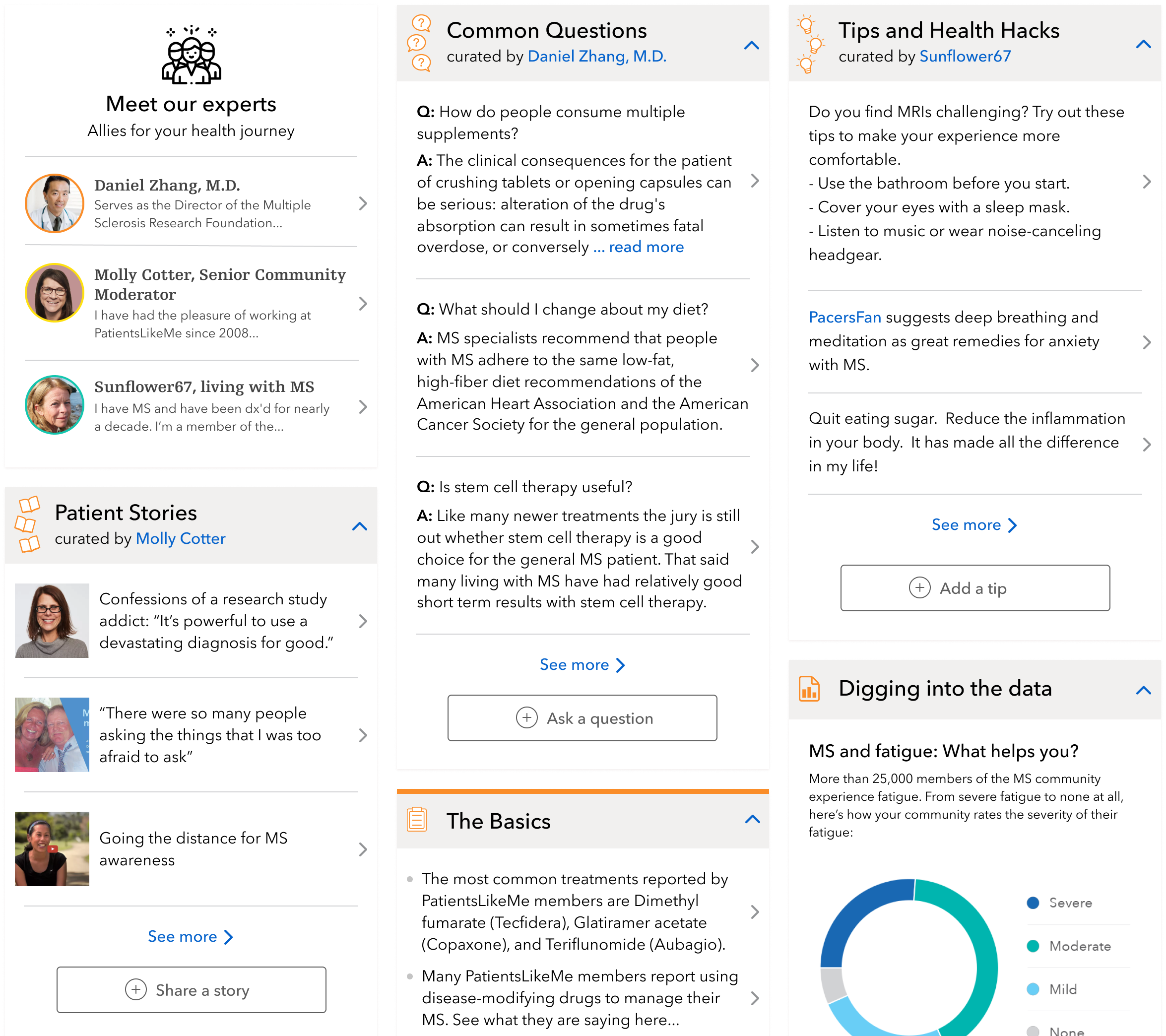
After piloting the “Topics” experience and building several enhancements and iterations, we were at a viable state where the service was launched to 100% of our users. At this point, we knew there was unexplored territory around how we might introduce “expert” voices or curated content into the site.
This would be a risky departure from our current brand so we decided to test some hypotheses in another design sprint. We formed a cross-functional team of product, marketing, development, moderators, and clinical experts to come up with a testable prototype. We explored the model of having a trio of “experts” (clinical, moderator, and patient) who curated certain sections of each topic.
The feedback we received from our members while testing the prototype was that the highest value content was still the tips and stories shared by other patients. This validated our initial direction from the start of the project, and told us that it wasn’t worth shifting investment toward a more clinically curated experience.
This was a “successful” design sprint, as we were able to test and ultimately move on from an idea that might have otherwise taken 3-6 months to stand up and build using a more traditional process.