


Transitioning Toward Value
I was approached by a company looking to address an unmet need for their provider groups. They had an offering that enabled primary care doctors to participate in value-based care programs, but there wasn’t a ton of transparency on how these providers were doing over the course of the year and where they could focus to further improve. After a few conversations with the Chief Product Officer, we aligned on a project goal and a 10 week iterative design process.
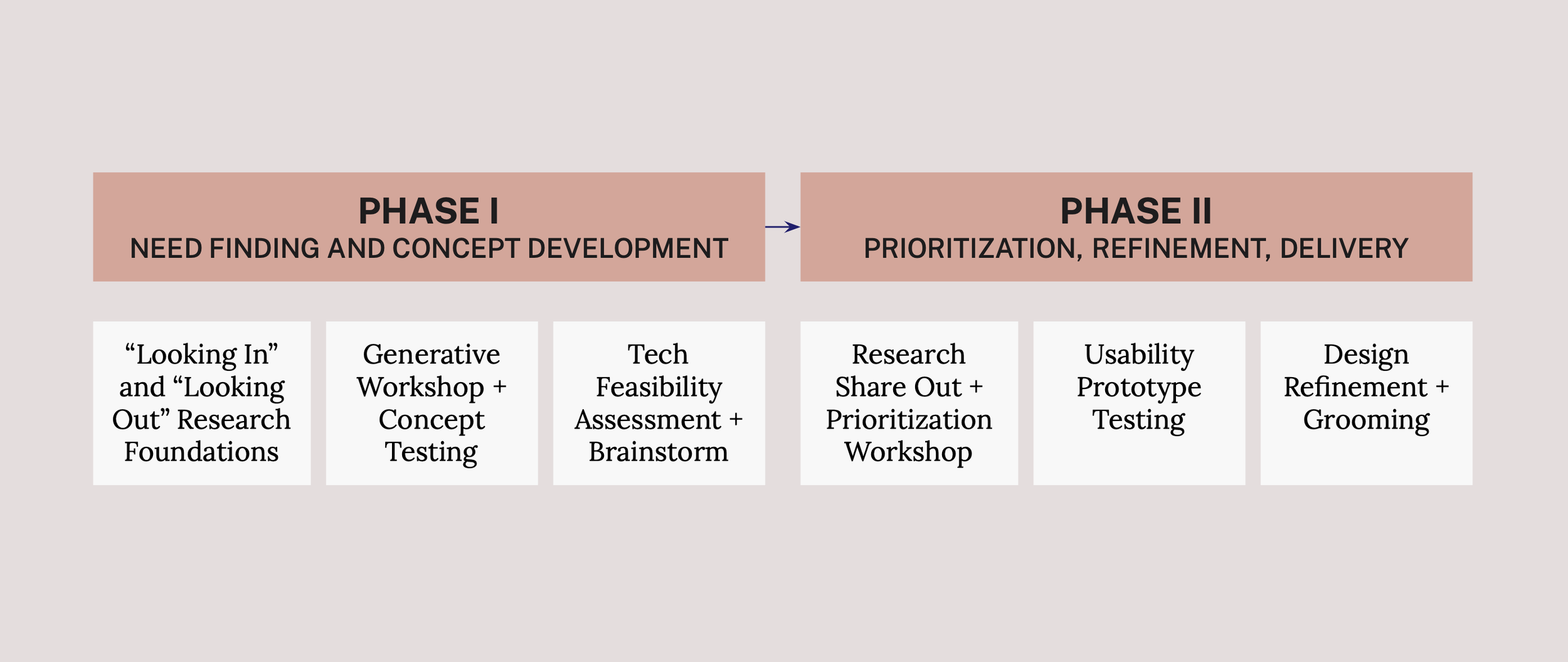
Getting Inspired and Generating Concepts
After a series of internal interviews and synthesis of prior research, I brought a cross-functional group together (virtually) for a half-day workshop to align on key problems, opportunities, and potential concepts. We grounded ourselves in the context of what we had already learned about our users, and got inspired by a range of analogous experiences.
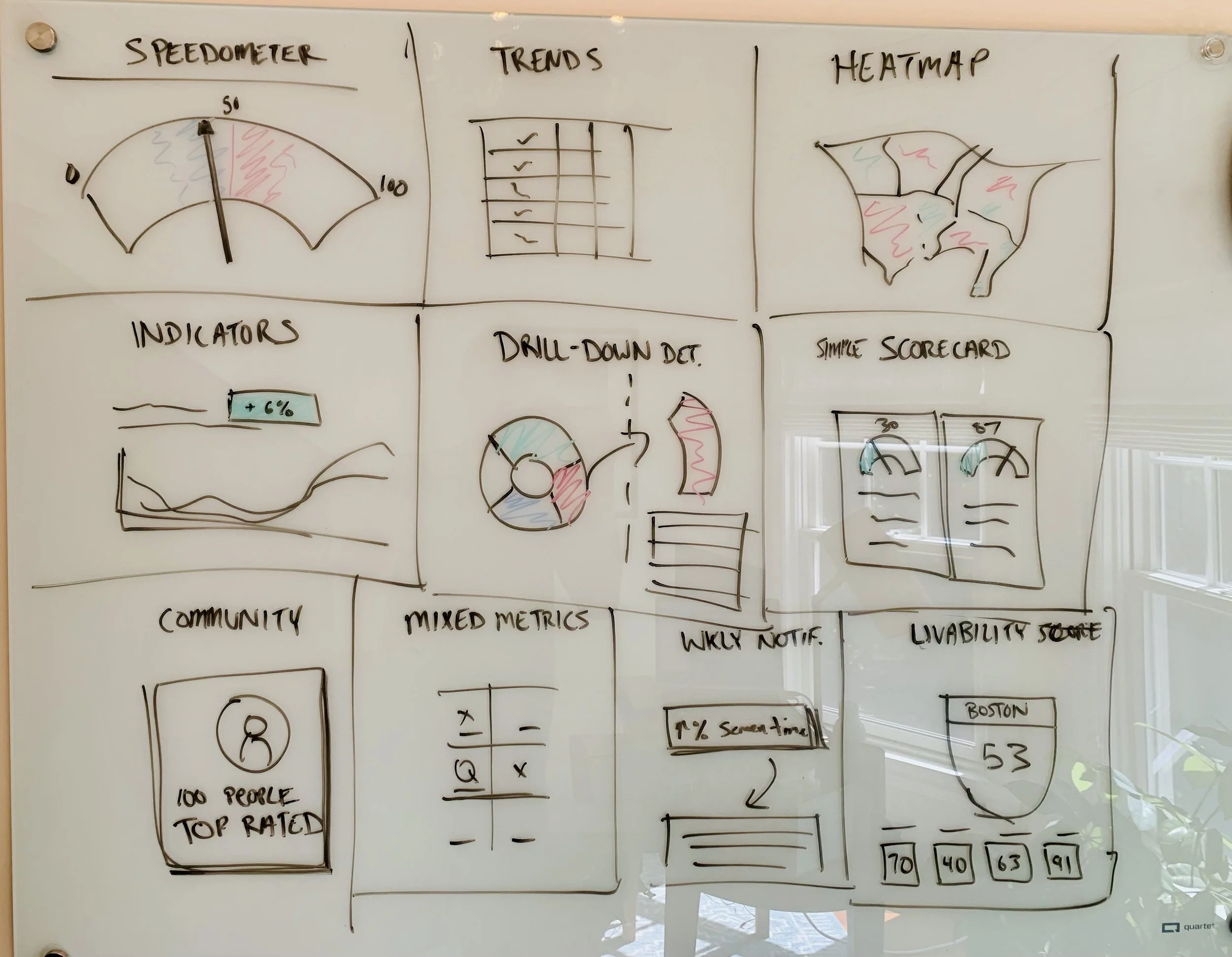
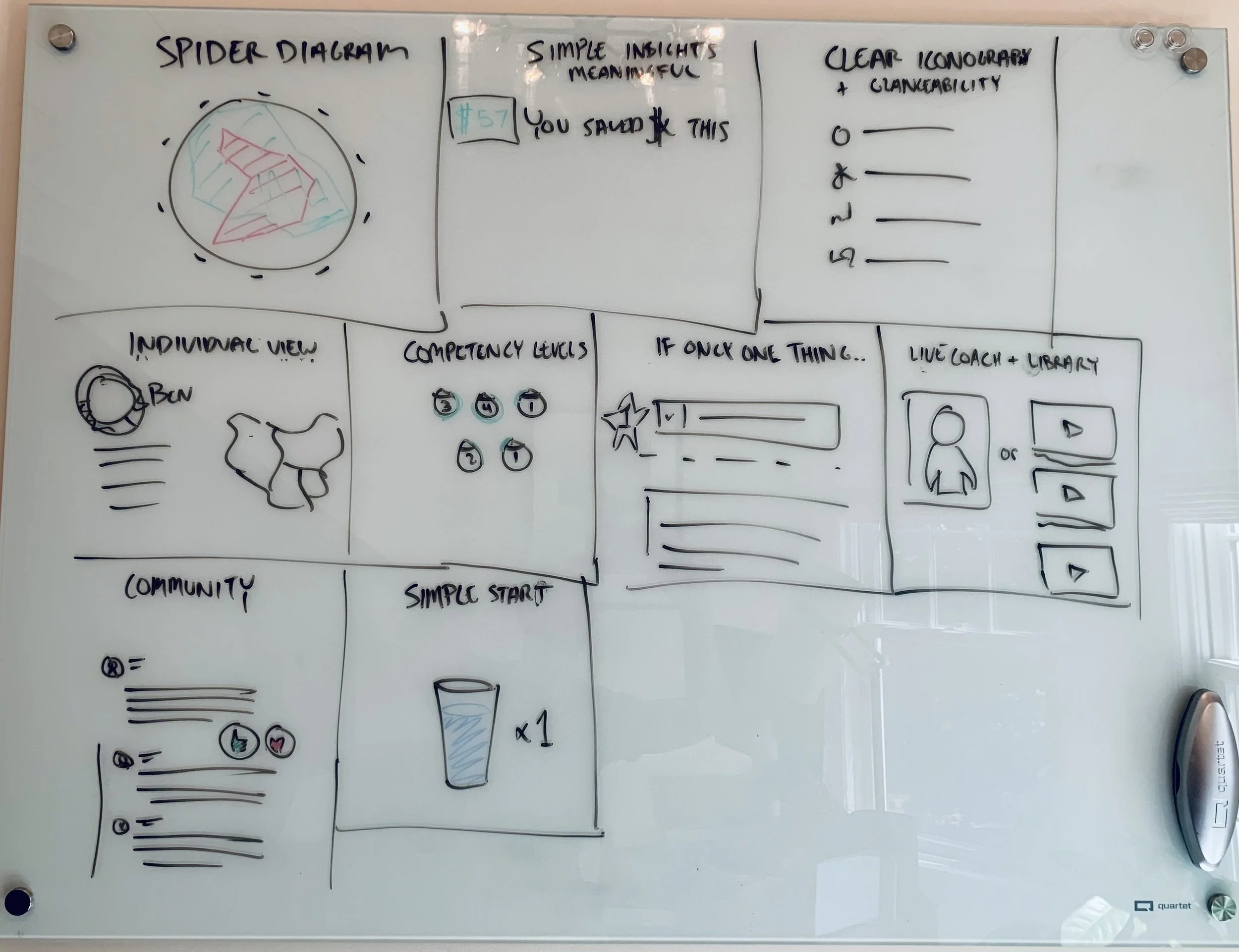
Using Sacrificial Concepts to Validate Needs
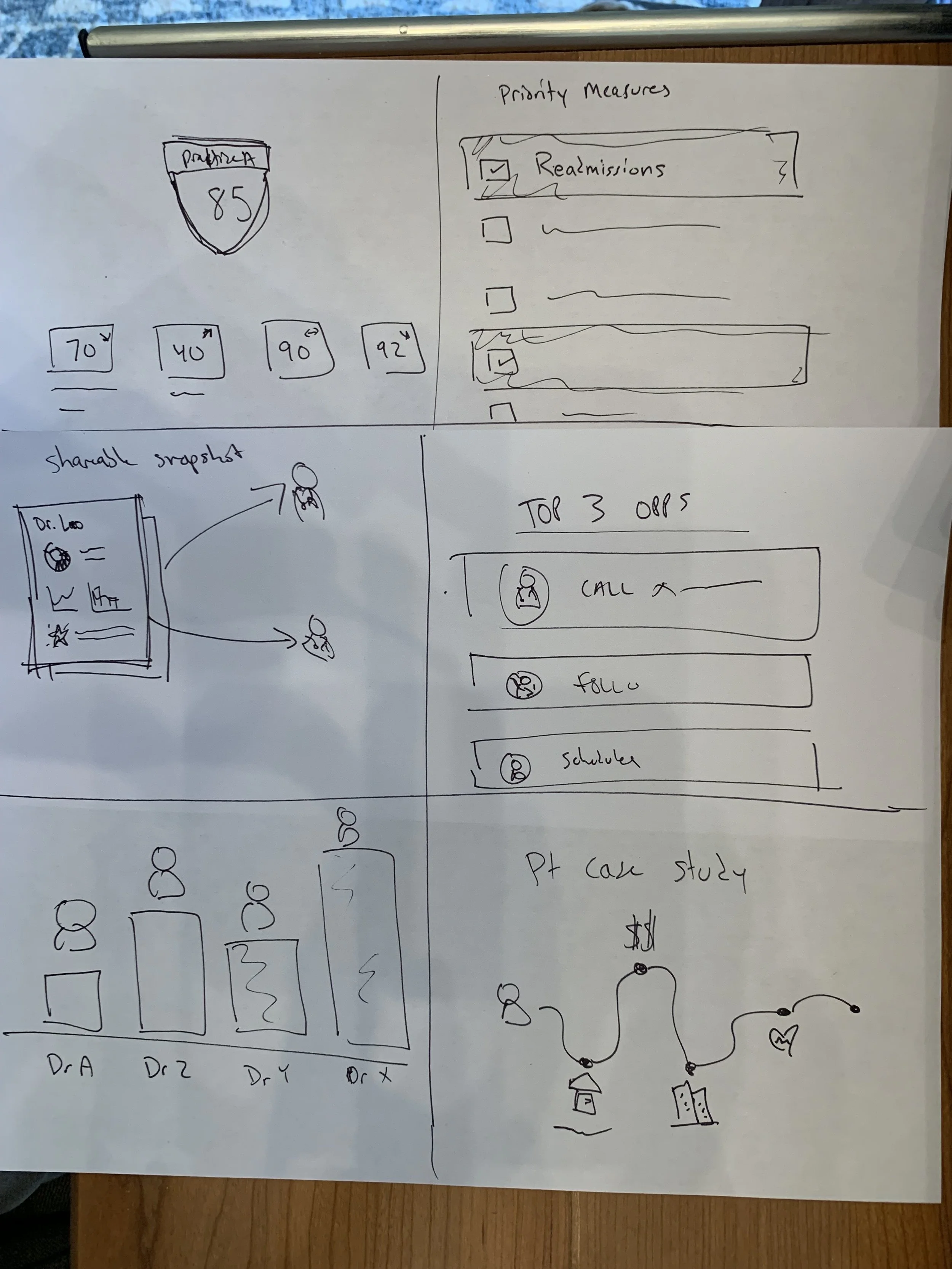
I was able to help the team translate the initial ideas generated in the workshop into “sacrificial concepts.” We developed a discussion guide based on some of our key questions and design tensions and used these concepts to provoke a meaningful conversation around the outcomes our users cared most about. I distilled this research into key themes, design tensions, and a framework for prioritization.
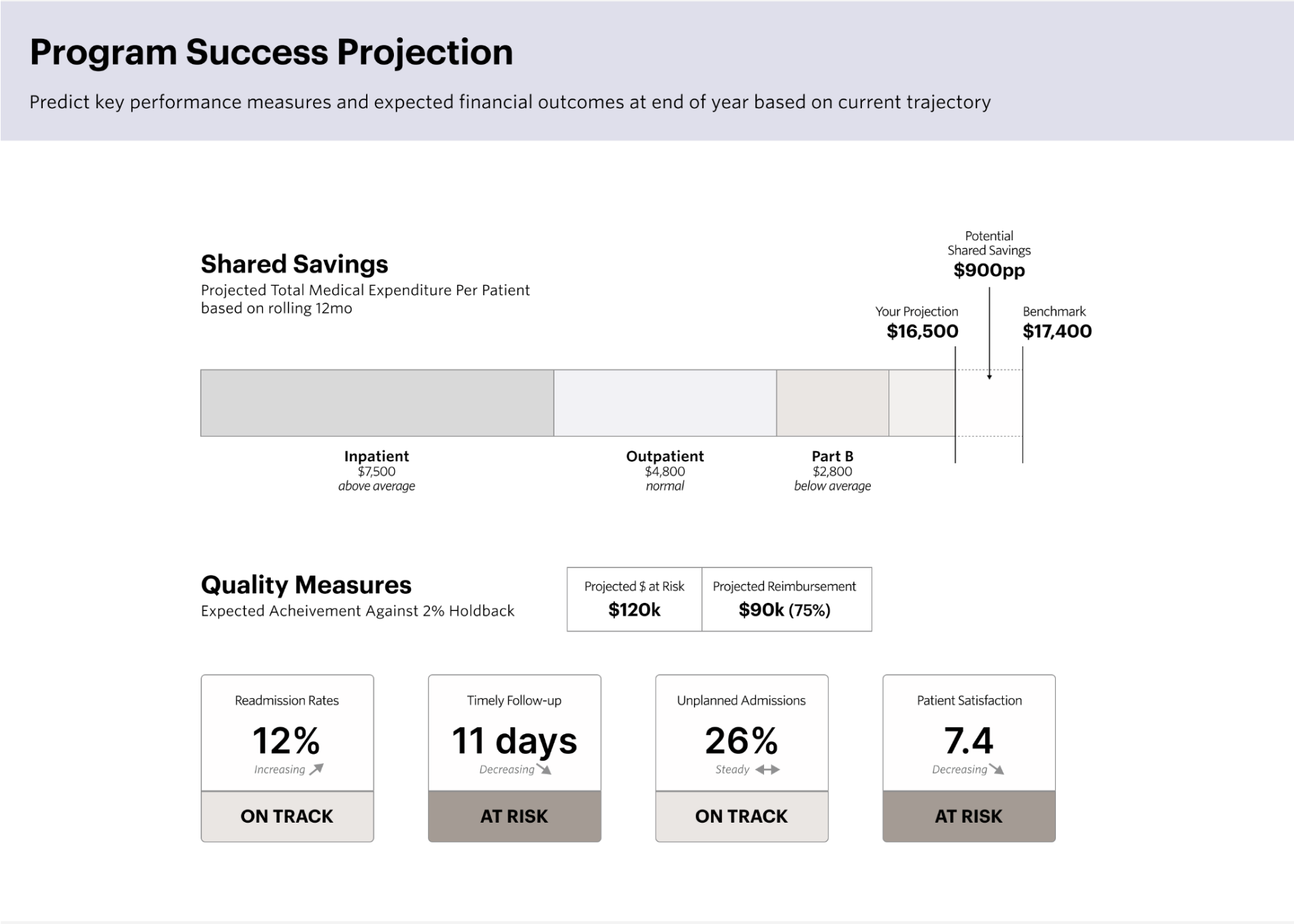
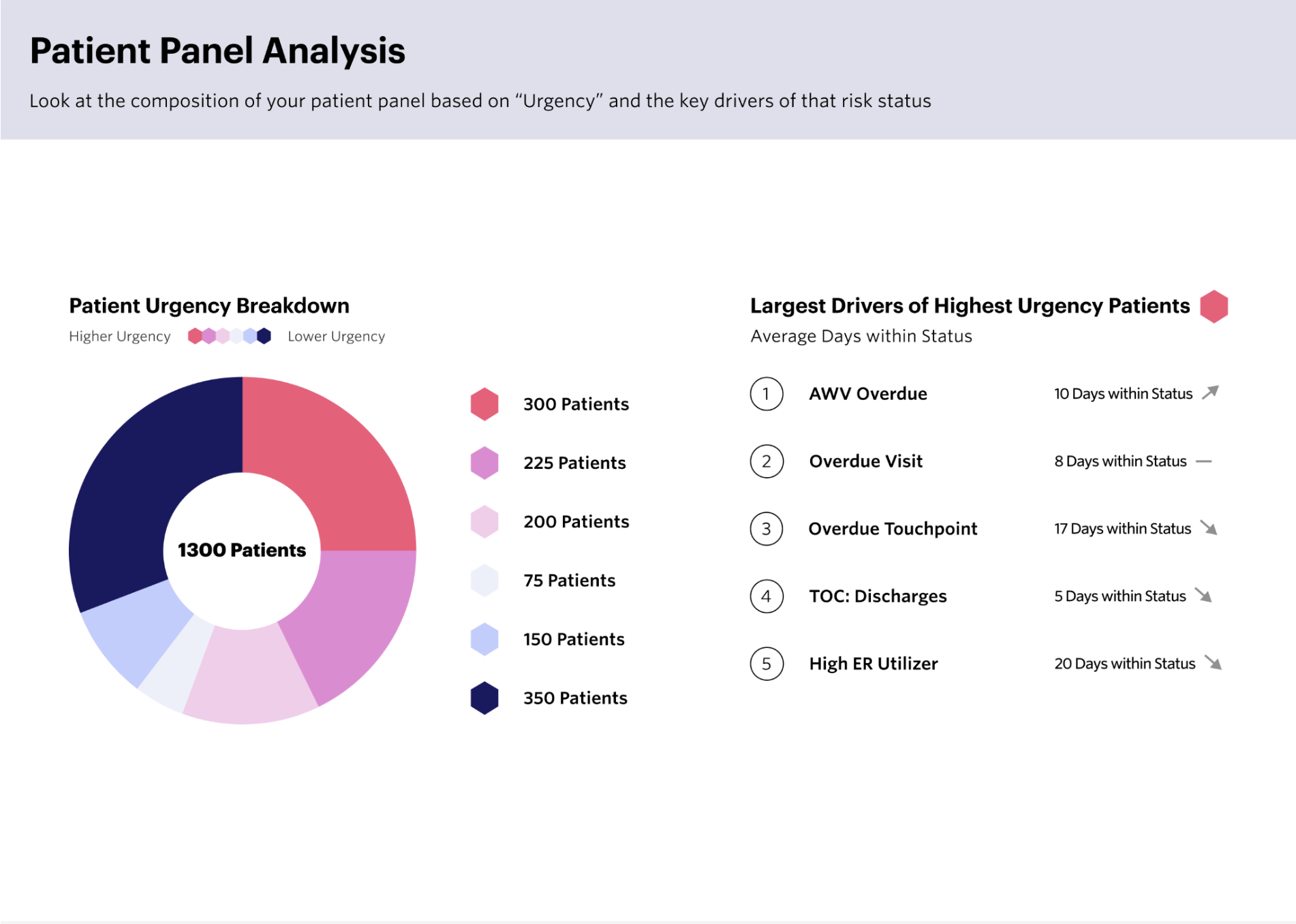
Examples of our sacrificial concepts
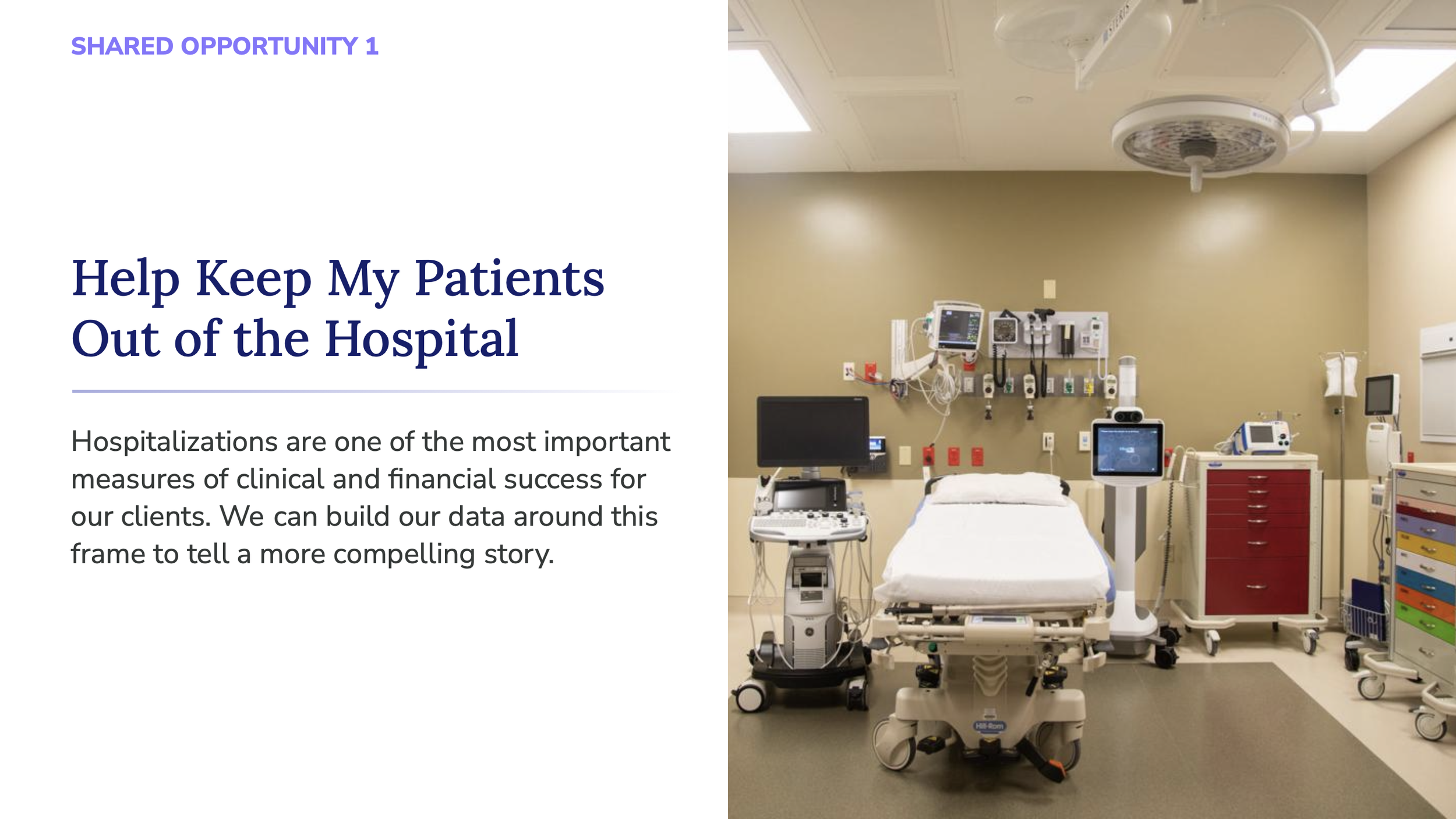
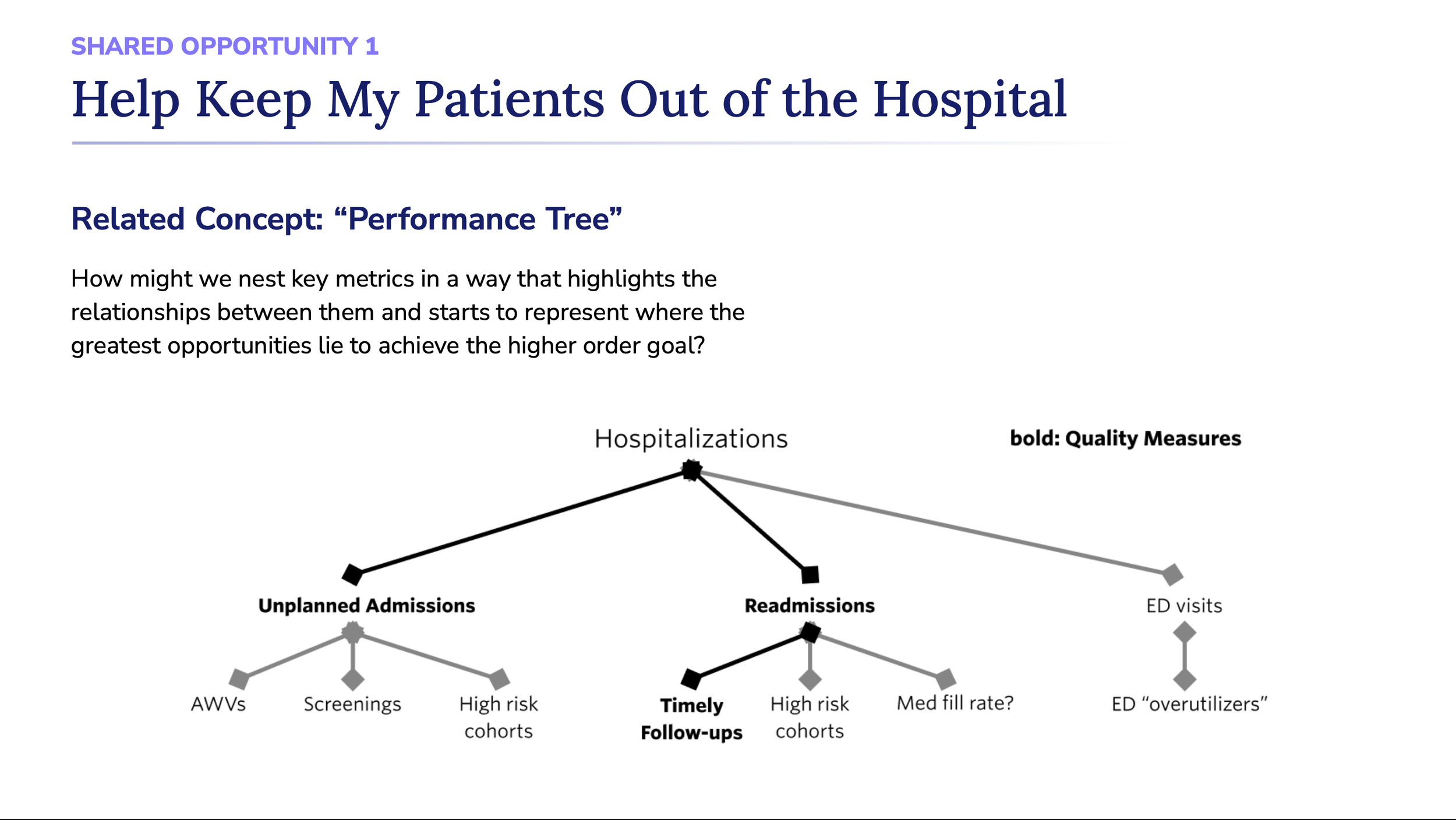
Examples of key themes
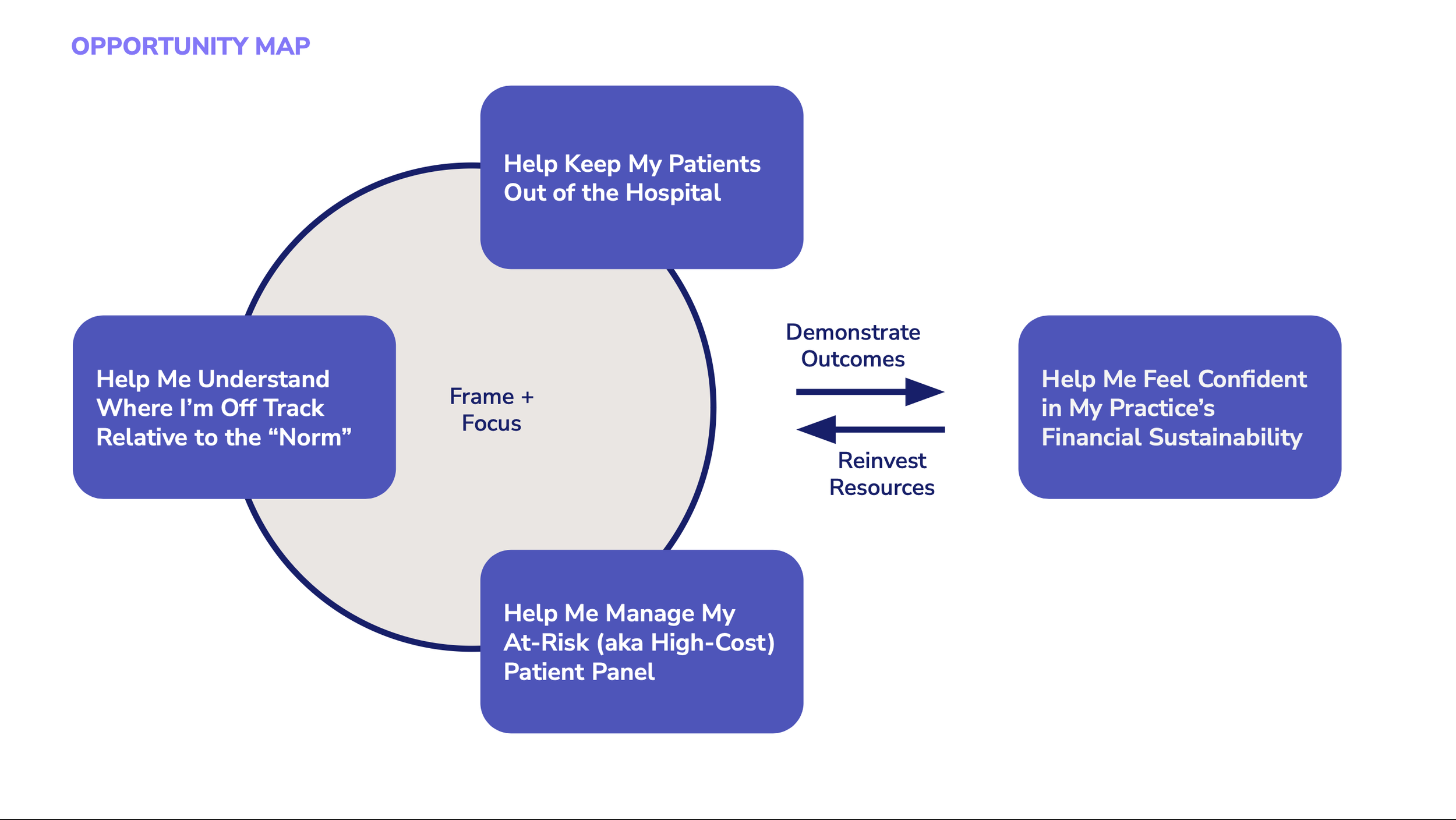
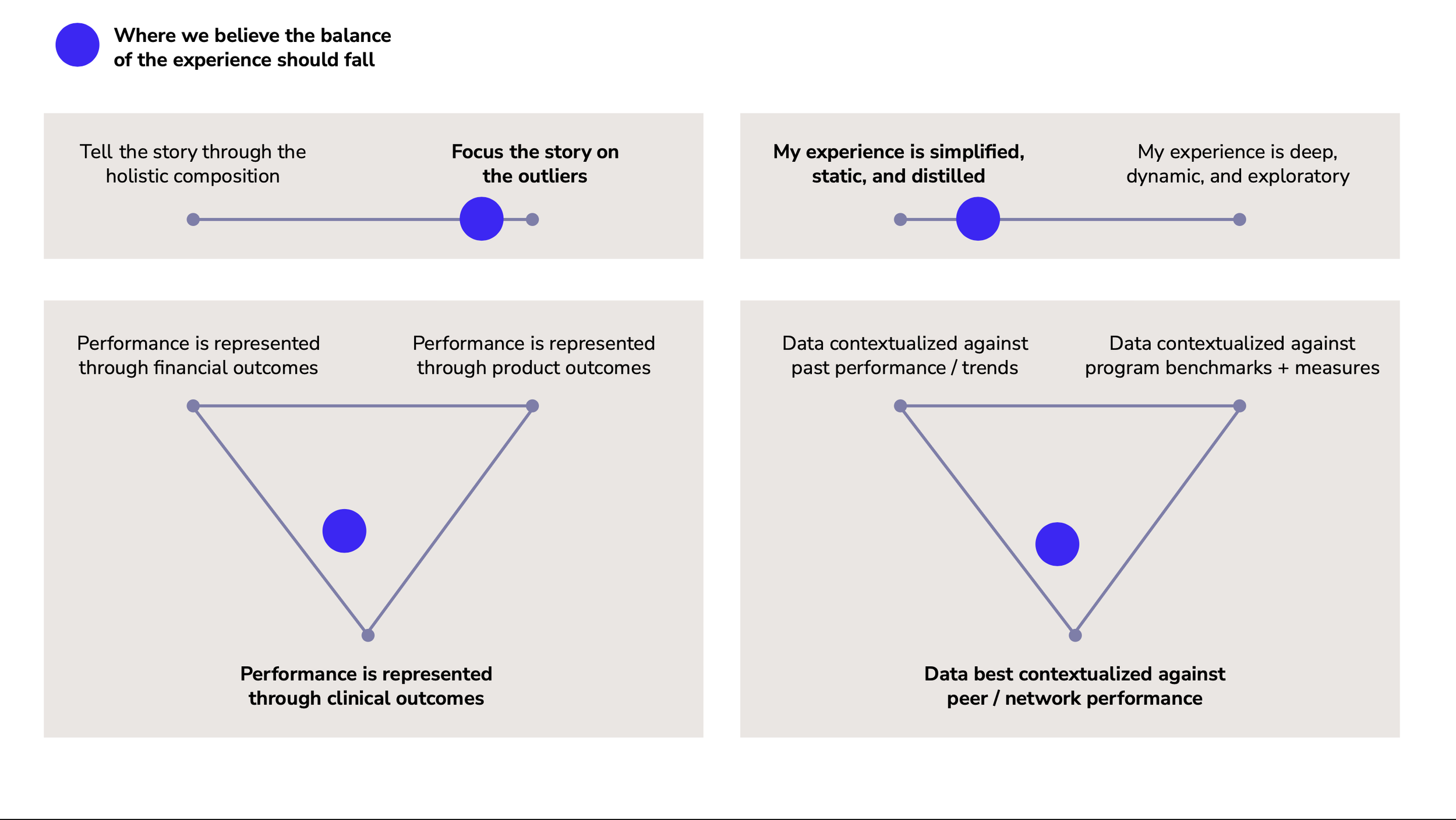
Examples of frameworks and design tensions
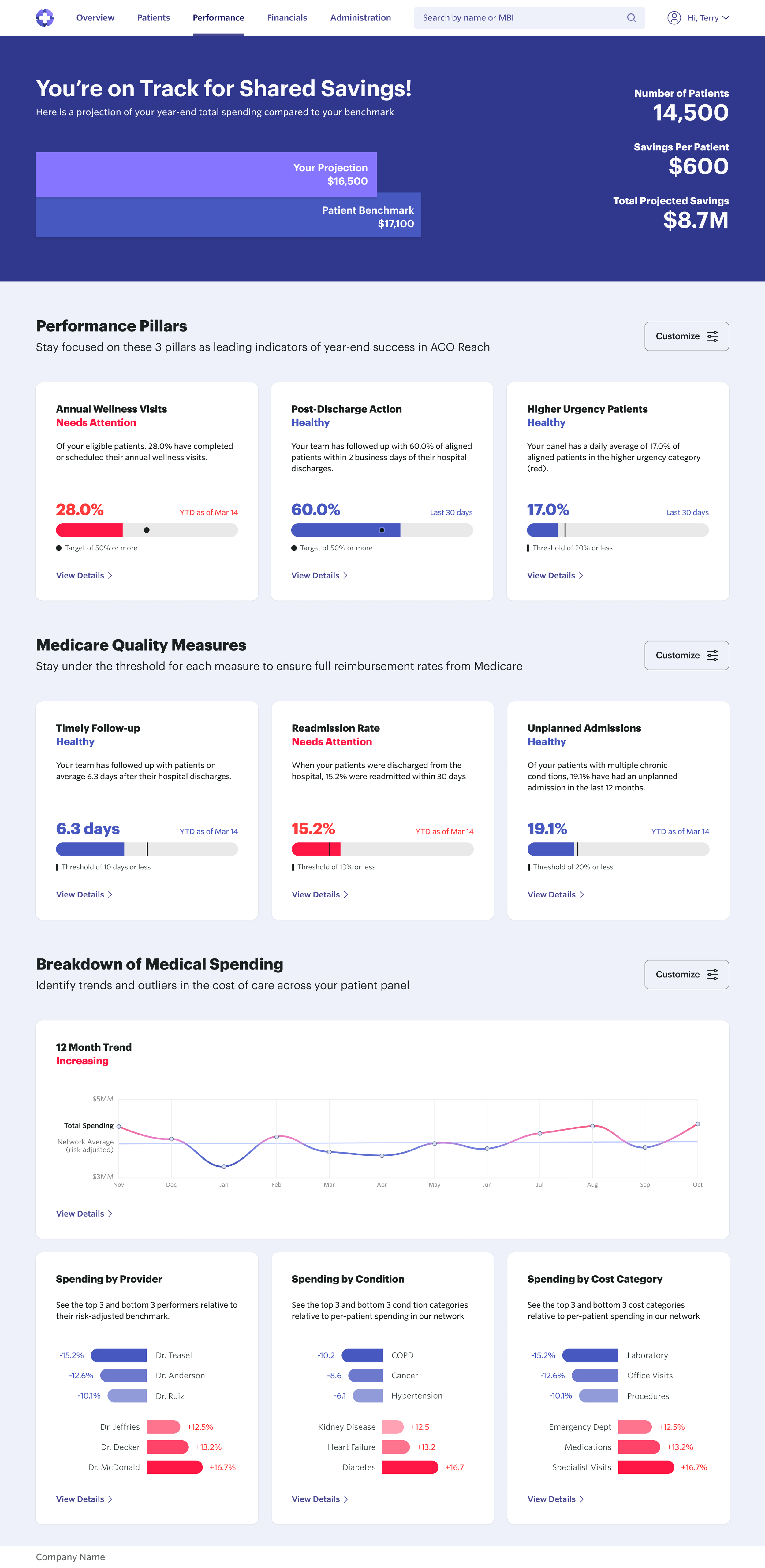
UX Iteration and Refinement
I took the initial feedback from the round of concept testing and brought the team together to prioritize opportunities and assess feasibility of the various concepts. We went through many iterations of the design and ran another round of usability testing before aligning the team on an intended approach.
We had to make some difficult tradeoffs around scope as well as what we could currently build with our data models. Ultimately we created our MVP with a clear picture of what our most important goals were and what we hoped to learn in the initial launch. Because the details of the value-based care program were still pretty new to our clients, we acknowledged that we needed to leave room for plenty of iteration as we learned from each other.
Connecting to a Vision
At the end of the initial project engagement, we decided to extend our time working together and invest in the overall vision for the product offering. I worked with the leadership team and several key stakeholders to develop a narrative, storyboard, and a handful of concept UIs. The goal was to articulate through a human-centered lens the value the outcomes the company was hoping to drive for its customers.
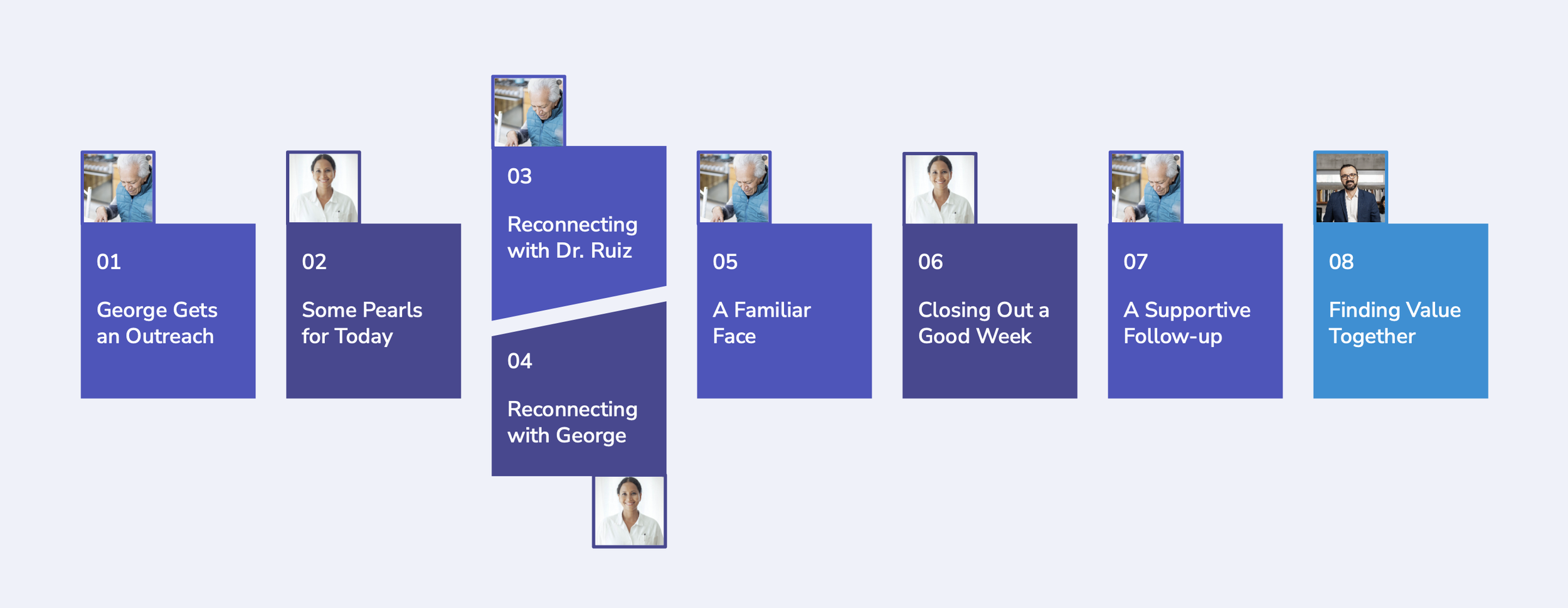
The overall journey
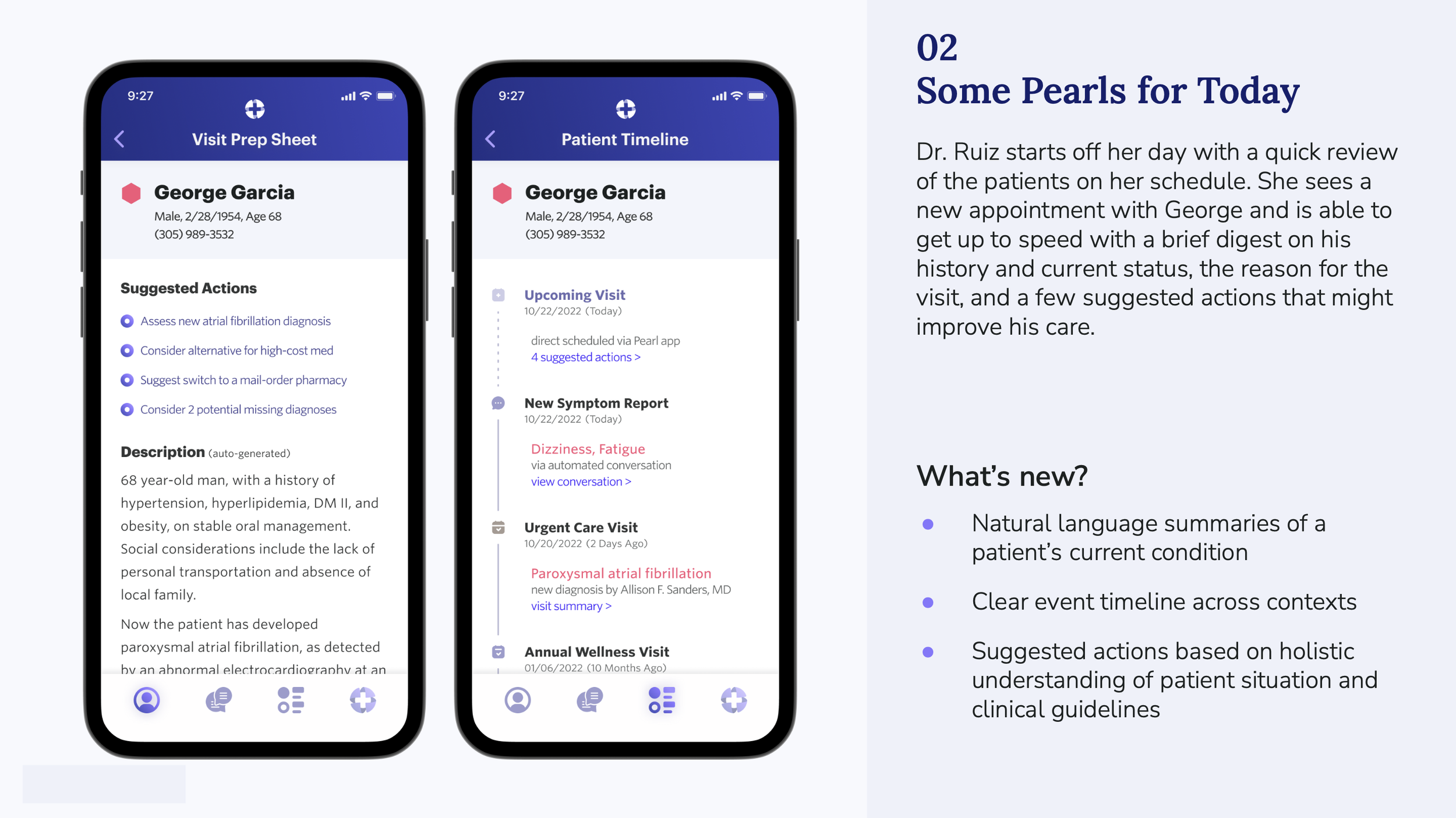
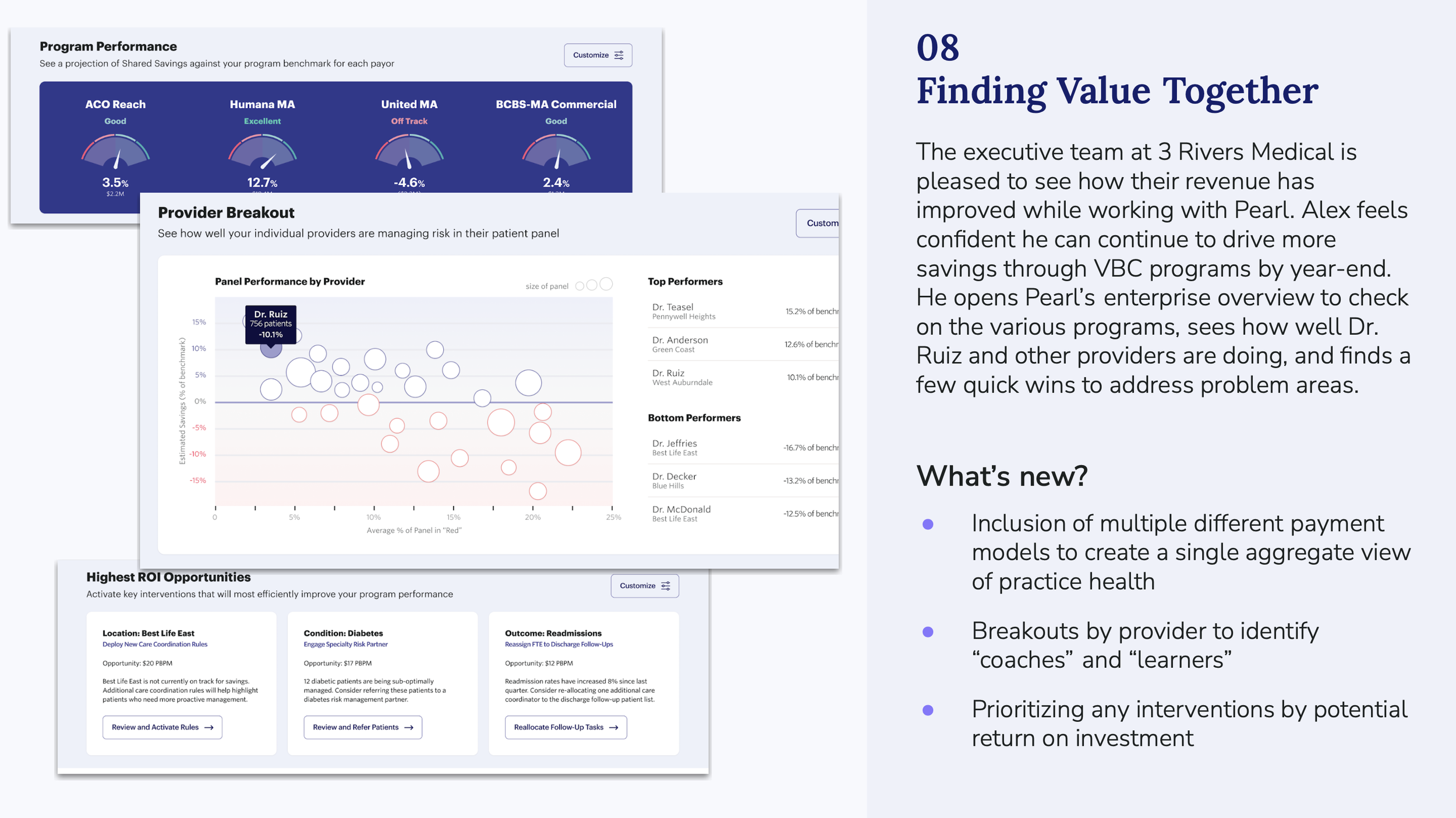
Storyboard moments and concept UIs